



A while ago (at least when I first drafted this post), someone on Twitter asked me for good resources to break into design. Although a simple question, I kept thinking about it for quite some time: where do people actually go these days?
This prompt has made me think about my own path, which emerged more by coincidence than purpose, like many others: Anton went through architecture before landing at Fantasy Interactive; Pavel graduated with a physical engineering degree before starting to bring book design to screens; And Dave started in the music industry.
Yet I think observing my personal experience is worth sharing, given how much has changed from the days I used to hack Photoshop. (Also, does anyone even hack Photoshop anymore?)
I’ve got no formal design education, nor did I take any design-related courses. My parents once bought me an HTML book when I was probably still in elementary school, which, in loose translation from Hebrew, was titled in something like “Mom, Dad, I Built a Website.” Although I did dig a bit into it, it didn’t stick.1
I should note that the following lines would perhaps be better perceived by the ultra-auto-didactes who aspire to learn everything on their own. Or maybe not.
Find a community, any community
If I were allowed to give only one advice to a beginner, then it would be to find a community, and not necessarily a design one. As I lamented before, I used to spend a lot of my youth in many different internet communities—from torrents, to graphic design, and just local generic bulletin boards. However, only recently have I come to realize how deeply all of those experiences have shaped me, as I wrote in Niche design:
At the beginning of my journey, I heavily relied on established communities. Without their existence, I wouldn't have entered the scene. I would have probably never noticed it.
I was introduced to design by a local forum; I got paid through design contests; I stepped into the global design community by joining dribbble; I read the news on DesignerNews; and I joined Twitter to follow other designers.
Since I joined the internet, online communities have been the core of everything to me. They were the anchor point. In the pre-era of social networks, they were my favorite third places where I could learn new things, meet people, and discover the wild wide internet. The source for any rabbit hole I was interested in. And besides entertaining a teenager, they were also good for doing business, as Dave Gorum (Carbonmade co-founder) attests:
“I’d change the copy on the site [Carbonmade], and then literally see people copying it on del.ici.ous. I could watch it ripple through the blogosphere.”
Though my entry point to this world was slightly after the del.ici.ous moment, there were still many websites like dribbble, DesignerNews, and DeviantArt that introduced me to the design world at scale.
Coming back to the question I opened with, I feel kinda depressed. The examples mentioned above have stopped being useful a long time ago: either they became over-commercialized, faded with the rise of social media, or were acquired and eventually sunsetted.
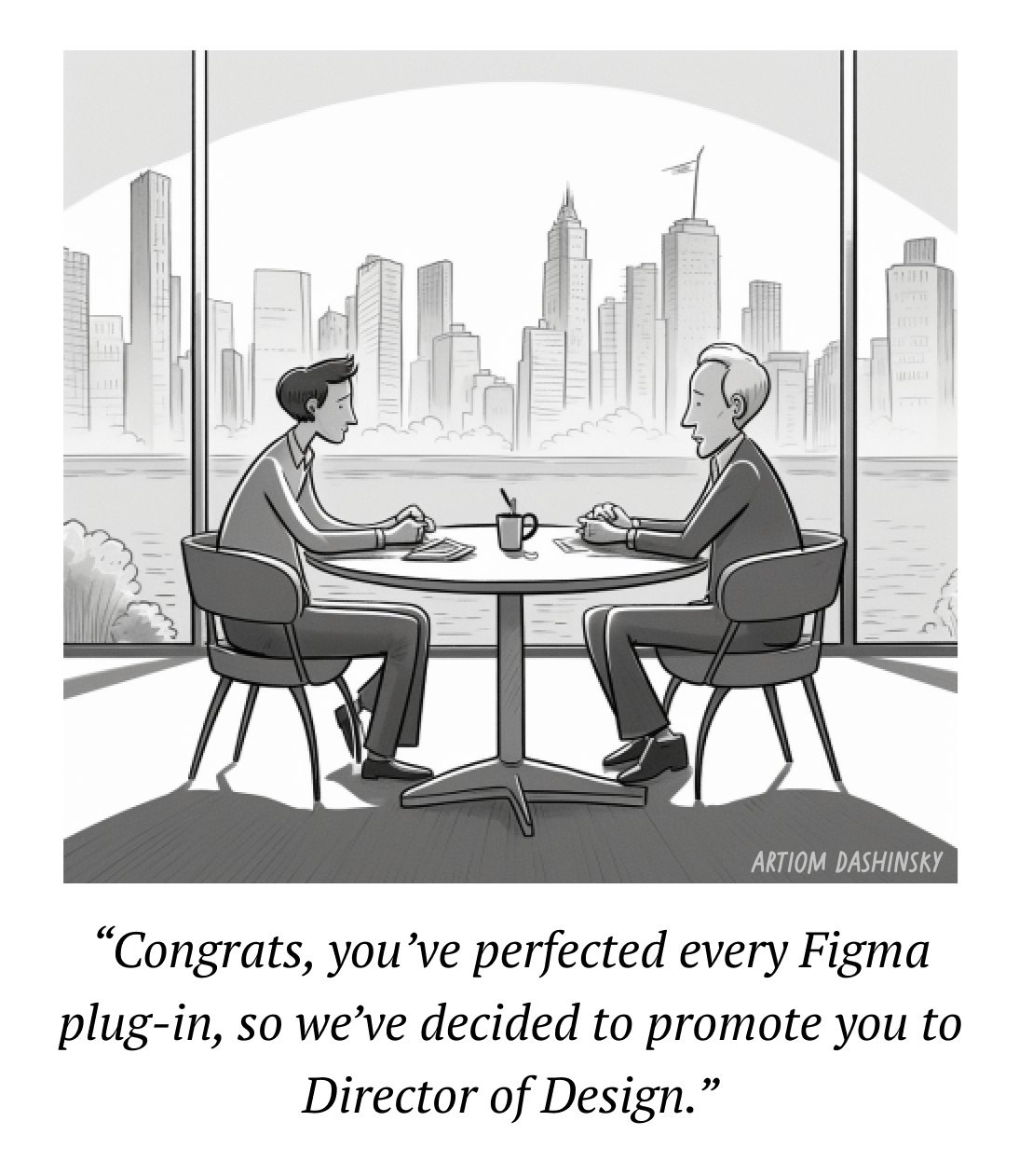
If you look at the design community of recent years, the landscape of open and accessible communities has shifted towards tooling. Take Figma and its annual Config conference for example. Every year, its agenda is basically the same, asking what would best serve its business purpose and goals. It’s a natural business decision, particularly for a company that’s now public, but from a deeper human perspective, it feels misaligned.
Thinking of the early Photoshop days, communities were scattered—a byproduct of the not-so-old internet. This era featured websites (again, as I mentioned before) that were owned by for-profit business owners, yet they didn’t push so hard to dictate a culture that sanctifies corporate commercialism.
Communities should serve as a fertile ground for interaction, not only engagement in its shallow meaning, i.e., thumbs up, likes, or emoji spreading.
Here’s Dave again, reflecting on the early days of the design community:
We’d share screenshots and riff on each other’s ideas. I liked that because it revolved around project launches, which is how I’m wired—launch-driven, show-your- work energy. I was really into sites like SiteInspire and those old CSS galleries. That ecosystem of showing off your work in semi-structured ways was exciting.
Seeking communities anew
And it’s not that communities are dead; it’s the dynamics that have significantly changed. You can still gain attention on mainstream social media, but as one guy I met said to me: “There’s no such thing as organic traffic anymore”. This may be an overgeneralization, but that’s where communities have headed in recent years, due to the rise of social media. It’s no longer about our mutual desires, but our business interests, if any.
If you get deep into a very specific community, you’ll end up making friends, networking, and eventually working: paid gigs, side projects, and other collaborations. When I helped others launch and design their own torrent forums and discussion boards, I got noticed to help others, too.2
Aside from a seemingly strategic business perspective, becoming prominent in any community will allow you to develop a taste and specialize in anything you want.
As identified in the recently published Welcome to the Post-Naive Internet Era, new platforms are reviving this past-lost internet community idealism by building differently—upon a movement, instead of enshittifing business economics:
“These projects aren’t driven by nostalgia, or even growth. The point is that influencing the world today is not about creating scale; it’s about developing the conditions that determine how culture is created, distributed and monetized.”
Welcome to the Post-Naive Internet Era
Severin Matusek, Nick Houde and Paloma Moniz
In that context, it’s worth revisiting the early days of dribbble or DeviantArt. Tech and design culture were still in their infancy—often naive, imperfect, and certainly not the sole reason the internet evolved the way it did. Yet within those early creative communities, a different ethos was taking shape. Looking at the top-right quadrant of the Post-Naive era map, a few contemporary platforms stand out for how they revive that spirit. They’re not just focused on scale or optimization, but on nourishing a community—the kind of fan-only mode I like to see.
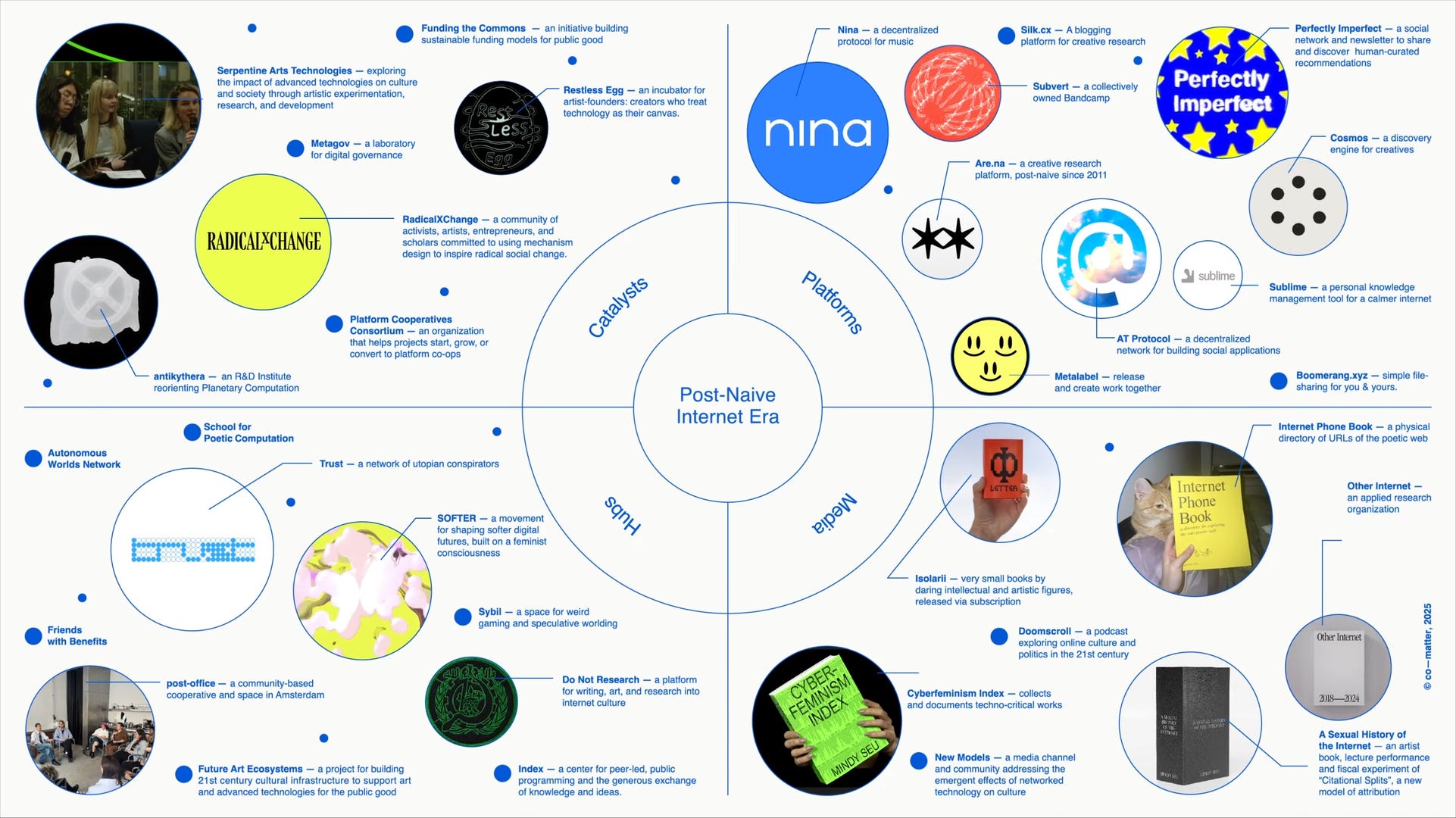
This is just an intro, but it shows that you can still be building a great for-profit company that relies on a community approach in a very literal way:
Are.na’s is sustained by its community (+ early crowdfunding)
Subvert gives musicians more ownership
Metalabel serves as a distribution hub for creative practitioners
Sublime was shaped early on by a deeply loyal community
Such dynamics make those platforms stand out above the surface, gaining attention by attracting those who seek alternatives to the current system of social behemoths, and make them likable to their existing audiences. And at least from the outside, it appears to be a more sustainable and healthier model.
Where might or should communities head
When I think about “design communities,” I don’t envision strictly more Slack/Discord channels or other discussion boards per se. What I’m longing for is more scattered blogs and publications that enrich the discourse.
There have been many community-based courses and other cohort-structured programs aimed at aspiring designers, while being very technical: entry-level Figma, design basics, etc. There is far less available for those in the middle ground, between beginners and seasoned practitioners.
As design evolves outside its boundaries, I feel there’s a lot more room for people to create spaces where knowledge and experiences are being shared—detached from corporate interests.
One good example is UX Collective. It has been running for many years, consistently curating and featuring a wide range of perspectives from across the industry. And despite Medium’s repeated turmoils, it has continued to exist and remain relevant.
Having said all that, I won’t resist for a new DesignerNews to emerge, a “design LessWrong”, or something like Read.cv that was recently shut down.
When I close up the community part of Niche design, I write:
Ultimately, what’s needed is a shift in the industry mindset. We need more communities, not tools. There are so many new tools for designers but so few communities. Tools make our job easier. Communities make us better designers.
Being an active part of Are.na or Sublime has made me good connections and internet friends. Thinking about those tools in this internet era, it’s not just about using the tool; it’s also about participating in its broader aspect. And that’s largely part of the community essence.
We, designers, won’t become better by attending the Figma conference each year to learn about the newest features promoting the latest business agenda. We’ll do it by re-establishing better, stronger, and humane communities.
Let’s move on, because the process is the goal.
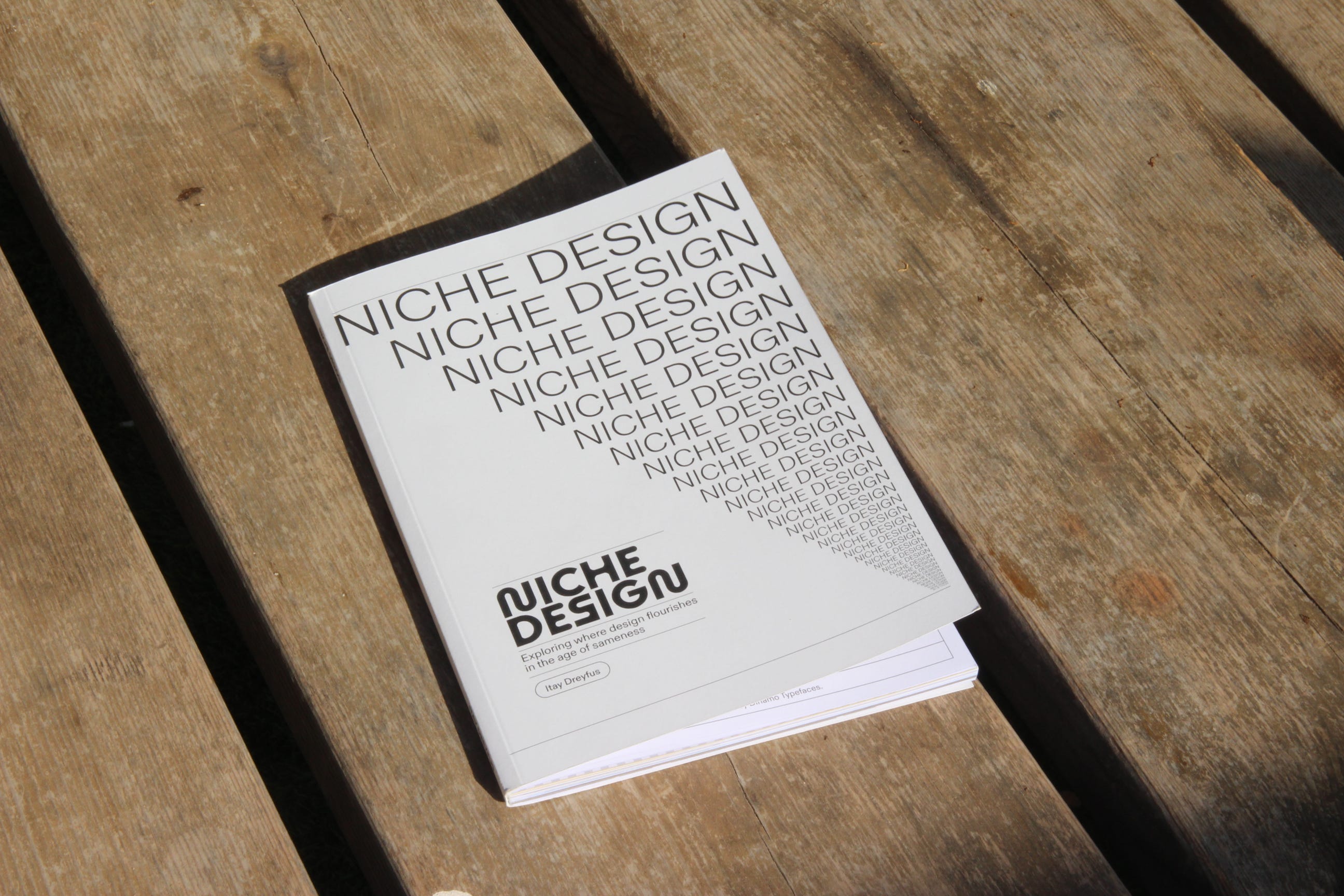
Product Identity is completely free. If you wish to support my work, purchasing a copy of Niche design, either in print or digitally, is the best way to do so.
In the context of computers and design, my map of interests probably didn’t change from that time, but funny enough, I went deep into HTML/CSS only years later.
While I advocate for active participation, I feel obligated to say that the current atmosphere feels very weird. There’s no doubt the internet will reward you at some point, but compared to the past, it feels way harder. And for that, I need to quote Dave again:
But the dynamics for getting traffic and attention were changing by the end of Carbonmade. My early ideas were running out of steam, too. It was time for me to leave all of it.