


This piece was originally published in Niche design vol.1, my self-published print magazine exploring where design flourishes in an age of sameness.
You can read the magazine version here:

The desire to build an empire, instead of a small village, is one of the biggest evils in tech. For many startup builders, success comes in the form of achieving the hockey stick—an ethos that has long been maintained by venture capitalists and tech veterans.
In many ways, design culture has been adapted from the tech industry—the same one that aims for infinite scale. As a result, it became tempting for many to design blandly for the masses because that’s what the culture came to reward.
Although strongly rooted in the startup handbook, I find growth to be a significant force that limits design at any pursuing scale company. And while G-R-O-W-T-H is the holy grail in this industry, it has paradoxically become its Achilles heel.
The reality of common design today is similar to the media industry. To reach a loftier number of audience (AKA rating), content is deliberately made superficial, aiming at the lowest common denominator. Therefore, trends, ideas, and practices become repetitive and widespread.

There’s this idea of smallness described by designer Ben Pieratt that has been stuck in my head ever since I stumbled upon it. In his retrospective on his startup “failure” Svpply Pieratt wrote:
“With hindsight, I feel the reason Svpply never grew into anything substantial is because we misread the opportunity. Smallness was the steam that drove our engine and we opened the gasket.”
The longing for growth is a force of inertia. It’s a natural process in many aspects of our lives. Companies, especially startups, want to grow—and fast. But scaling comes with no small costs. It has to sacrifice quality in favor of the capital engine.
Can craft excellence be maintained without sacrificing its soul? The farther one sails, the harder it gets. When software becomes bloatware, it gets harder to oversee its total components. And when an artifact is no longer manageable, the whole experience gets worse.
But here lies an interesting idea. This is perhaps not the most lucrative business advice, but it seeks to find a balance between money and craft, as a way to produce more authentic and creative output.
Fan-only mode
Rehabilitating from this growth plague isn’t made by feature or product decisions. It demands a profound shift.
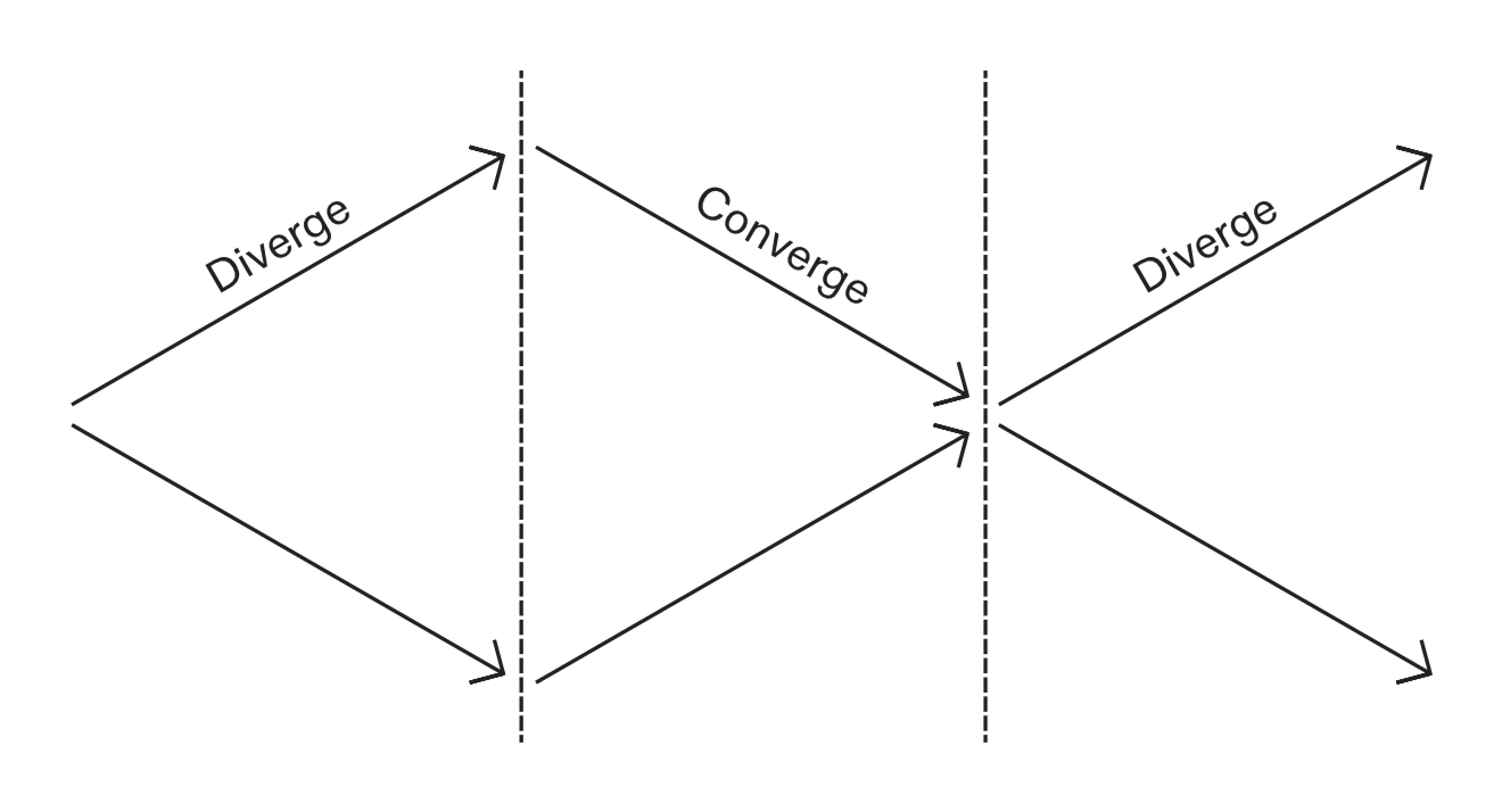
As companies grow, they gradually move from a fan-only state to a product made for everyone. During this transition, dramatic changes occur as the drive to satisfy broader audiences and boost revenue intensifies. It’s a turning point where hyper-growth dynamics start to overshadow good design.
A product, which often starts as a small, weird creature, gradually evolves into a multi-armed octopus: it often becomes scattered and overwhelming, filled with an excess of features and poor usability issues.
On a broader level, its parent brand diverges to please more tastes, leaving people questioning its purpose and values.
Then, over time, the magic slowly faded away.
In a world glorifying soaring revenues and celebrating the highest possible achievement of mankind, unicorns, it’s no wonder that the majority follow this path. We’ve been taught to go big or go home, but perhaps home is where we need to go.

It appears that only small things can be efficiently preserved. When an artifact grows to a substantial size, it often falls into the void of sameness—lacking soul and becoming vanilla.
Why can’t an artifact remain small and naive, like a small indie music band, touring in niche-eerie festivals?
I appreciate it when things remain weird and distinct—not just for the sake of it, but because it tells a true story. There’s something about explicitness that can point one in the right direction.
When I look at music festivals and type foundries websites, everything suddenly looks different. Even though some have reached massive growth with millions of downloads, high revenues, or whatever, a real voice and soul can be seen from their websites. It doesn’t get bland, but rather becomes more opinionated and unique.
But perhaps divergence is inevitable for any multimillion-dollar, revenue-seeking company. And this is perhaps why small design is the best design.
Some years ago, I used to think that the more people your design reaches, the better. Now I’m convinced the opposite—the less you design for, the better. This is not to kill great ambition, but to understand how design can naturally grow.
What if companies remained in the fan-only mode? I believe we would see not only great design evolve, but also thriving small giants1.
Product Identity is completely free. If you wish to support my work, purchasing a copy of Niche design, either in print or digitally, is the best way to do so.
A “small giant” is a company that chooses to optimize for mojo instead of growth.